
A Quick History of Espresso: The Truth About Dose Size
Before we dive into specific drinks, we need to take a quick step back in time. Espresso as we know it today isn't the result of scientific research into the ultimate flavor, it’s the product of technological evolution.
The ancestors of today’s espresso machines were large percolators designed for bulk brewing. They only reached about 1 bar of pressure, generated entirely by steam. Machines resembling today's setups didn't appear until the early 20th century. While they could finally generate around 9 bars of pressure, nobody was tracking coffee yield or dose. The technical limitations of the time (6 cm group heads and 58 mm portafilters) simply meant you could only fit 7 grams of coffee per serving. This small dose yielded roughly 30 ml of liquid.
Changing the Game: The Rise of Specialty Coffee
Everything changed around the year 2000 with the arrival of the specialty coffee movement. Baristas started experimenting with higher doses and discovered something huge: it tasted significantly better.
A higher dose helps eliminate channeling: a phenomenon where water finds the path of least resistance through the coffee bed, leading to uneven extraction and a bitter or sour cup.
Today, a double shot is the industry standard. Baristas use a dose of 18 to 20 grams of coffee to yield 36 to 40 grams of liquid. Even if you order a single espresso, baristas should still brew it as a double shot and serve you exactly half. Why? The result is much more concentrated, syrupy, and of far superior quality.
Don’t compromise on flavor. Explore our selection of specialty coffees, roasted with obsessive precision right here in Brno.
The Real Coffee Menu (And Why Everything You Knew Is Wrong)
Forget what you thought you knew. Here is the actual breakdown of what will arrive on your table at a specialty cafe.
Ristretto
The truth is, the traditional ristretto doesn’t exist anymore. This drink originated in Southern Italy, where coffee was dark-roasted to the point of looking like tarmac. Traditionally, a ristretto used the same 7-gram dose as an espresso but was pulled to only half the volume—around 15 ml.
Interestingly, that matches today’s standard 1:2 espresso brew ratio (1 part coffee to 2 parts water). What Italians once considered an incredibly short ristretto is basically our everyday espresso today.
If you tried to make a ristretto today by simply stopping a modern extraction halfway through, it would taste terrible. At the very beginning of extraction, salts and intense acids wash out first. The pleasant flavors and sweetness develop later to balance it all out. If you cut the shot short, you’re only drinking that first, unbalanced part.
Doppio
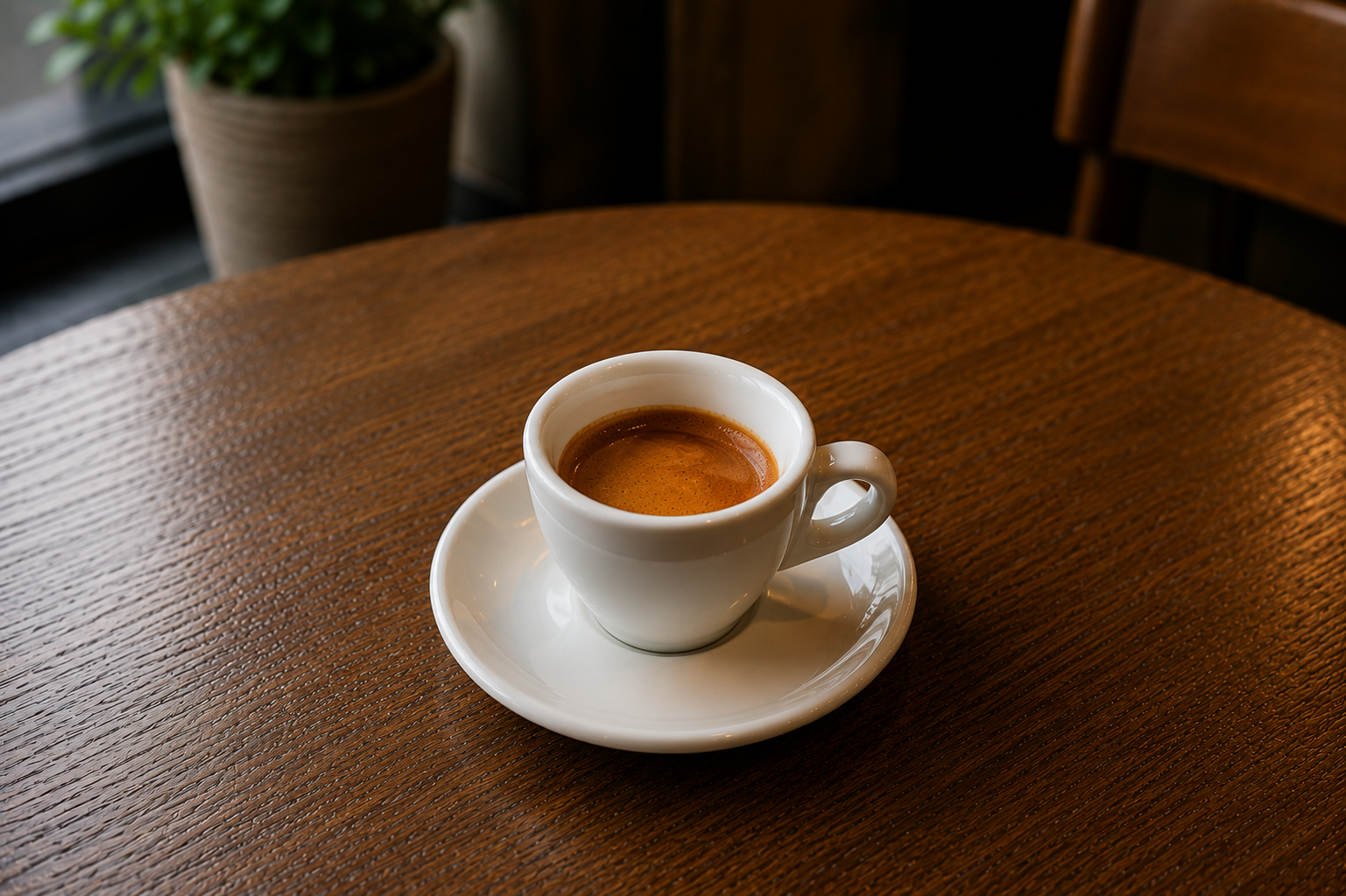
A doppio is simply a double espresso. In modern barista terms, it’s the pure liquid gold extracted from a double dose of coffee (18 to 20 grams). While a standard single espresso only uses half of the yield, with a doppio, you get the entire volume from the portafilter.
The only difference between a single espresso and a doppio is whether the barista places two small cups under the spouts, or one large one.
Americano vs. Lungo: Spot the Difference (Spoiler: There Is Almost None)
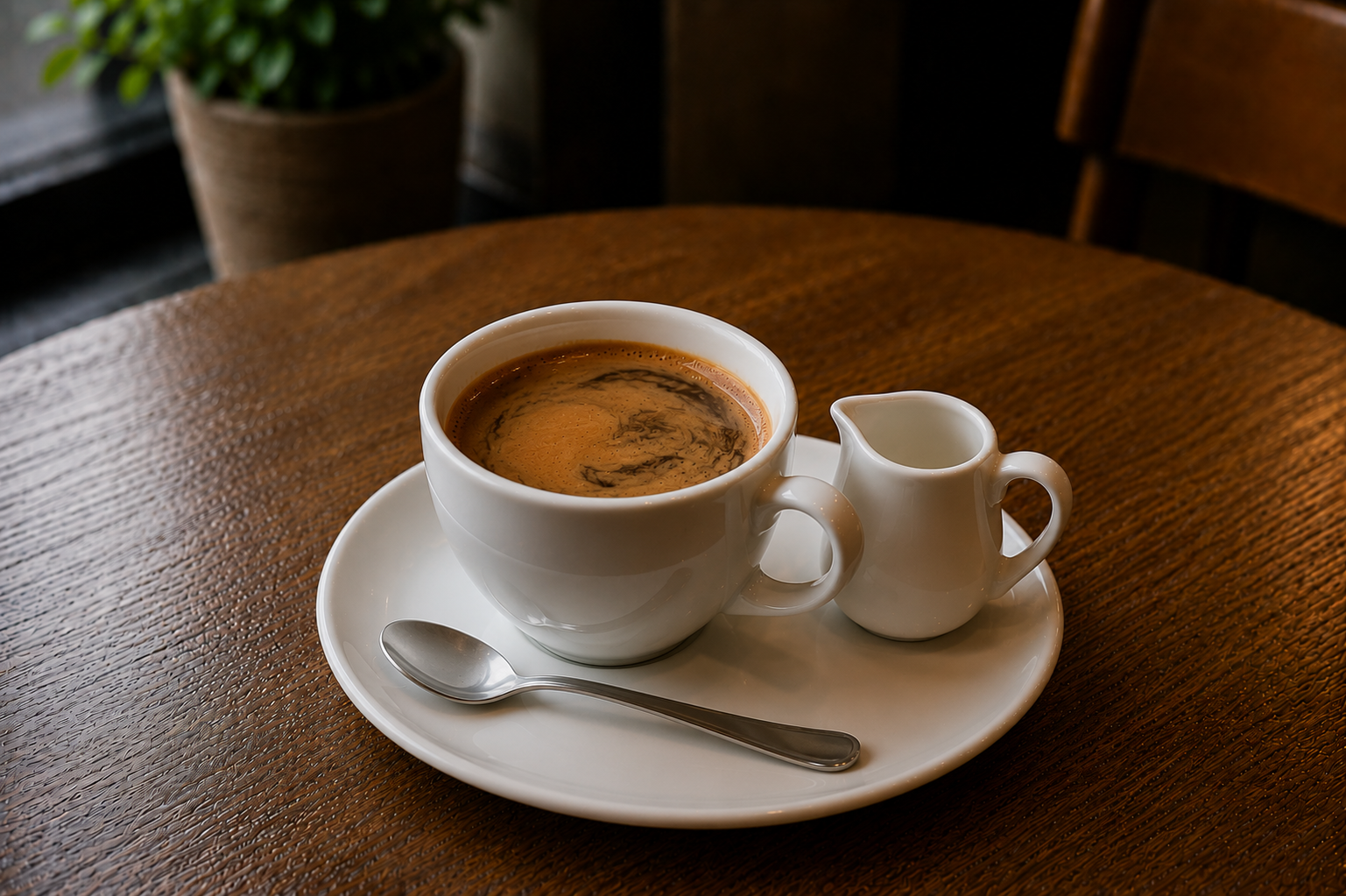
Americano: This one came first. When American soldiers were stationed in Italy during WWII, they found traditional Italian espresso way too strong. To make it more palatable, locals diluted it with hot water. The habit stuck. Today, an Americano is an espresso served with a side jug of hot water, allowing you to dilute it to your exact taste.
Lungo: The process here is reversed. A barista fills the cup with hot water first, then pulls a shot of espresso directly into it. However, very few cafes actually do this because a full-to-the-brim lungo is incredibly hard to carry without spilling. In reality, most cafes serving a "Lungo" are actually just serving an Americano.
Long Black (Also Known as Allongé)
A Long Black is a unique cousin in the Americano and Lungo family. It’s a drink where a larger volume of water passes directly through the coffee in the same amount of time as a standard espresso shot.
Because this extraction is extremely fast, it requires specific conditions: a high-end machine that can maintain consistent pressure, and adjusting the grinder to a coarser setting.
Unfortunately, many cafes keep their grinders set for standard espresso and just let the water run through the coffee bed for a minute and a half. The result? An over-extracted, incredibly bitter drink. Finding a truly great Long Black takes some serious scouting.
Cappuccino
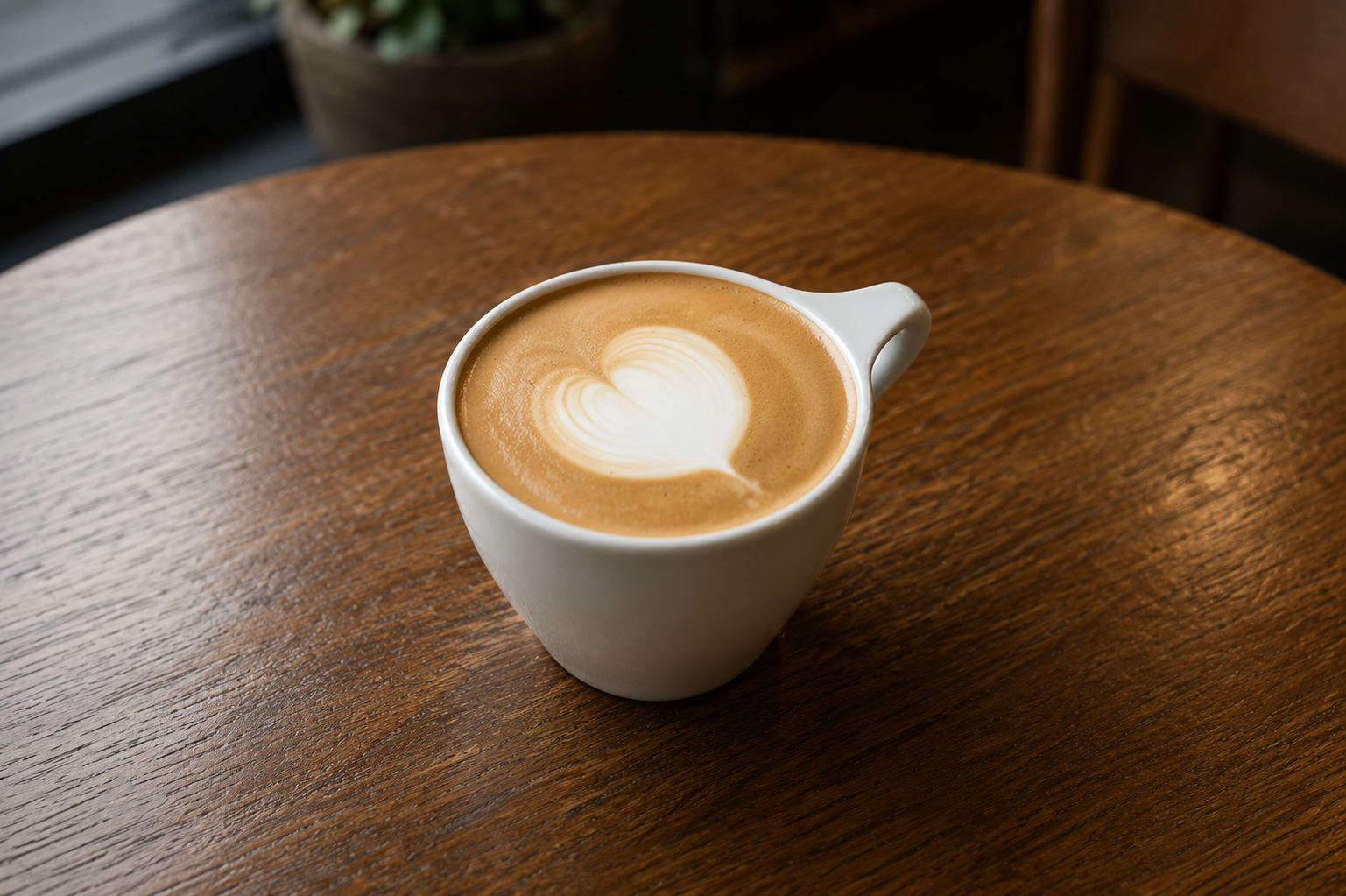
A cappuccino is a milk-based coffee drink whose character depends largely on the size of the cup. It starts with a single espresso shot topped with velvety milk microfoam. While some places use a 200 ml cup, we prefer the 150 ml size.
The traditional latte art on top isn't just for Instagram—it’s functional. The complexity of the design helps the barista control the thickness of the foam. The more intricate the design, the thinner and smoother the foam layer is.
In the mood for a cappuccino or a latte? Choose one of our delicious specialty coffees that pair perfectly with milk.
Espresso Macchiato
Think of it as a mini cappuccino. It's a standard espresso topped with a splash of microfoam to taste. If you’ve read old guides stating it should be exactly "one spoonful of foam," that’s outdated. Modern baristas only recognize one way to prepare milk: properly textured microfoam poured directly from the pitcher. Spooning stiff foam onto coffee is an archaic practice from the days of burnt, over-steamed milk.
Flat White
If there’s one drink that triggers endless debates in the coffee world, it’s the Flat White. Hailing from Australia, it always brings up the same question: What actually is it, and how does it differ from a cappuccino?
Essentially, it doesn’t differ much. It’s basically a cappuccino served with an extra shot of espresso. While a classic Aussie Flat White is served in a 120 ml glass, many cafes will pour it into a 250 ml cup. And honestly, there's nothing wrong with that.
Caffè Latte
This recipe pairs a single or double shot of espresso with a larger volume of milk. Some baristas pour the espresso first and add microfoam; others do it the other way around. Both ways are perfectly fine.
What is a mistake, however, is insisting on the legendary three separate layers. That’s exactly how a latte shouldn’t look. Three distinct layers mean the milk was over-steamed, way too hot, and failed to blend with the coffee. A properly made caffè latte should look like a cappuccino served in a glass: a homogenous mixture of coffee and milk topped with a thin layer of foam.
Filter Coffee Methods: Demystifying the Brew
Even though you can use dozens of different gadgets to brew filter coffee, there are really only two core methods: Full Immersion and Pour-Over. (The Moka pot is also out there, but it operates in a league of its own).
Full Immersion: This method works just like steeping tea. You take ground coffee, pour the entire volume of water over it, and let it sit. The most famous example is the French Press.
Pour-Over: For this, you need a paper, metal or other perforated filter. You place the coffee inside and pour hot water over it. The water passes through the coffee bed just once, dripping straight into the vessel below. This is how a classic batch brewer or a V60 works.
ABOUT THE AUTHOR
This article was written for you by barista and roaster Roman Nejedlý, 2024 Barista of the Year, passionate coffee geek and innovator. If we mentioned something you don't agree with or want to ask about, drop us a line! Otherwise, head over to our shop and pick up some luxury coffee beans for espresso or filter. We've got the classics, juicy lots, and absolute fruit bombs waiting for you.